



HIOKI Earth Testers
HIOKI Earth Testers are professional instruments designed for accurate earth resistance, ground resistance and grounding system evaluation in electrical installations. The range includes FT6380-50, FT6031-50, FT3151, FT6041 and FT6041-91, covering clamp type, digital, analog, 2 pole, 3 pole, 4 pole, selective and stakeless testing methods. These testers are suitable for electrical installation, industrial maintenance, grounding inspection, commissioning and troubleshooting applications.
Customize
Share :
A. Product Overview
HIOKI Earth Testers are designed to measure the resistance of grounding systems and verify whether electrical earth connections are functioning correctly.
The range includes different models for different types of grounding applications:
HIOKI FT6380-50
Clamp type earth tester for measuring ground resistance in multi grounded systems without disconnecting the grounding conductor. It can also measure AC leakage current.
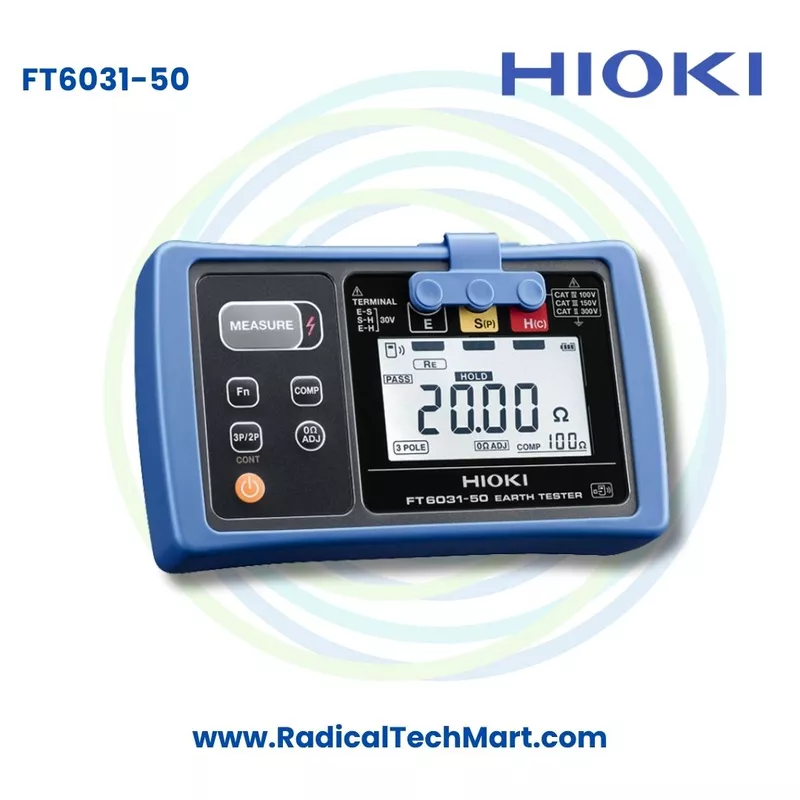
HIOKI FT6031-50
Digital earth tester supporting 2 pole and 3 pole earth resistance measurement. It features rugged IP65 and IP67 protection and is designed for demanding field use.
HIOKI FT3151
Analog earth tester for conventional 2 electrode and 3 electrode earth resistance testing. It is suitable for standard grounding inspection and maintenance work.
HIOKI FT6041
Advanced earth tester supporting 2 pole, 3 pole and 4 pole measurement, soil resistivity measurement, low resistance testing and additional grounding evaluation methods.
HIOKI FT6041-91
Complete earth testing set designed for conventional, selective and stakeless ground resistance measurement. It includes clamp sensors for advanced grounding system testing.
Together, these models provide solutions for simple electrical grounding inspections as well as advanced industrial grounding analysis.
B. Working Principle
Earth testers determine how effectively an electrical grounding system can conduct electrical current into the earth.
Depending on the HIOKI model and testing method, earth resistance can be measured using different techniques.
2 Pole Method
The tester uses an existing grounded structure or grounding point as a reference and measures the combined resistance of the grounding system.
This method is useful where installing auxiliary earth rods is difficult.
3 Pole Method
The traditional 3 pole method uses the earth electrode under test along with auxiliary current and potential electrodes.
The tester applies a test signal through the grounding system and calculates resistance from the measured voltage and current.
4 Pole Method
The 4 pole method provides additional measurement capability for applications such as soil resistivity testing.
Models such as the FT6041 can perform 4 pole testing and Wenner soil resistivity measurements.
Clamp Method
The FT6380-50 measures earth resistance by clamping directly around the grounding conductor.
This method is useful in multi grounded systems because the grounding conductor does not need to be disconnected.
Selective Measurement
Selective earth testing allows a particular grounding electrode to be measured while it remains connected to the overall grounding system.
This is useful in complex grounding networks where disconnecting an individual earth electrode is difficult.
Stakeless Measurement
Stakeless testing uses clamp sensors to evaluate ground resistance without installing auxiliary grounding rods.
The FT6041-91 supports this type of testing when used in suitable grounding systems.
C. Why HIOKI Earth Testers Are Used
Proper grounding is important for electrical safety, equipment protection and reliable operation of electrical installations.
HIOKI Earth Testers are commonly used for:
Checking earth electrode resistance
Testing electrical grounding systems
Verifying grounding after electrical installation
Inspecting grounding during preventive maintenance
Testing industrial electrical panels
Measuring grounding resistance without disconnecting conductors
Checking multi grounded electrical systems
Measuring soil resistivity
Evaluating grounding systems during commissioning
Testing grounding for factories and commercial buildings
Checking grounding systems for machinery and electrical equipment
Measuring leakage current with compatible clamp models
Performing selective earth resistance measurement
Performing stakeless grounding measurements
Regular earth resistance testing helps identify deterioration, corrosion, loose connections and changes in soil or grounding conditions that may affect grounding performance.
D. Suitable Buyers
HIOKI Earth Testers are suitable for:
Electrical engineers
Electrical contractors
Industrial electricians
Maintenance engineers
Facility maintenance teams
Electrical testing companies
Panel builders
Power distribution professionals
Utility companies
Factory maintenance departments
Automation engineers
Electrical safety professionals
Solar installation companies
Telecommunication infrastructure companies
Building maintenance contractors
Electrical consultants
Commissioning engineers
Grounding system contractors
Testing and calibration laboratories
Industrial service companies
They are particularly suitable for professionals who regularly inspect, install or maintain electrical grounding systems.
FAQ
1. What is a HIOKI Earth Tester used for?
A HIOKI Earth Tester is used to measure earth resistance and evaluate the performance of electrical grounding systems.
2. Which HIOKI Earth Tester models are available?
The range includes FT6380-50, FT6031-50, FT3151, FT6041 and FT6041-91.
3. Which HIOKI model is a clamp type earth tester?
The HIOKI FT6380-50 is a clamp type earth tester designed for measuring ground resistance in suitable multi grounded systems without disconnecting the grounding conductor.
4. What is the difference between FT6031-50 and FT6380-50?
The FT6031-50 is primarily designed for conventional 2 pole and 3 pole earth resistance measurement. The FT6380-50 uses a clamp method for measurements in suitable multi grounded systems.
5. What is the HIOKI FT3151?
The FT3151 is an analog earth tester designed for conventional earth resistance and earth potential measurement.
6. Which HIOKI Earth Tester supports 4 pole testing?
The HIOKI FT6041 supports 4 pole earth resistance measurement and soil resistivity testing.
7. What is special about the HIOKI FT6041-91?
The FT6041-91 is an advanced earth tester set designed for conventional, selective and stakeless testing. It includes clamp sensors required for these advanced measurement methods.
8. Can HIOKI Earth Testers measure soil resistivity?
Yes. The FT6041 supports soil resistivity measurement using the 4 pole Wenner method.
9. Can earth resistance be measured without installing auxiliary rods?
Yes. Compatible clamp and stakeless measurement methods can be used without auxiliary rods in suitable grounding systems. Models such as FT6380-50 and FT6041-91 support these types of applications.
10. Can the FT6380-50 measure leakage current?
Yes. The FT6380-50 can measure AC current, including low level leakage current, in addition to clamp type ground resistance measurement.
11. What is the difference between selective and stakeless earth testing?
Selective testing measures a specific grounding electrode while it remains connected to the grounding system. Stakeless testing uses clamp sensors and does not require auxiliary earth rods in suitable grounding configurations.
12. Are HIOKI Earth Testers suitable for industrial use?
Yes. They are designed for applications including industrial plants, electrical installations, maintenance departments, utilities, commercial buildings and field electrical testing.
13. Why should earth resistance be checked regularly?
Grounding performance can change because of corrosion, damaged connections, soil conditions, moisture variation and ageing of the grounding system. Periodic testing helps confirm that the grounding system continues to perform correctly.
14. Which HIOKI Earth Tester is suitable for advanced grounding analysis?
The FT6041 and FT6041-91 are suitable for more advanced applications because they support multiple earth resistance testing methods and soil resistivity measurements.
15. Can HIOKI Earth Testers be used during electrical commissioning?
Yes. They can be used during installation and commissioning to verify the grounding system before electrical equipment is placed into service.