

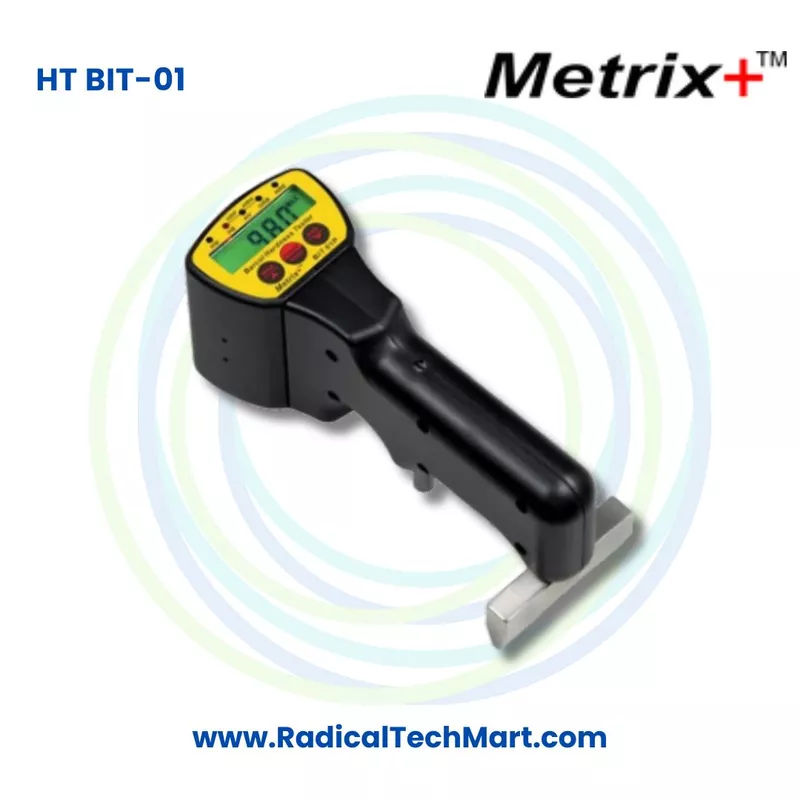
Metrix+ HT BIT 01P Barcol Hardness Tester for Aluminium and FRP
The Metrix Plus HT BIT 01P Barcol Hardness Tester is a portable indentation hardness tester designed for quick measurement of aluminium, aluminium alloys, aluminium castings, forgings, copper, brass, rigid plastics and fiber reinforced plastics such as FRP. Its portable design makes it suitable for production inspection, quality control and on site hardness testing where conventional bench type hardness testing may be inconvenient.
Customize
Share :
A. Product Overview
The Metrix Plus HT BIT 01P Barcol Hardness Tester, also known as a Barcol Impressor, is designed for rapid hardness measurement of relatively soft metals and rigid composite materials.
The instrument is particularly useful for testing:
Aluminium
Soft aluminium alloys
Thick aluminium alloys
Aluminium strips
Aluminium section bars
Aluminium castings
Aluminium forgings
Copper
Brass
Other soft metals
Rigid plastics
Fiber reinforced plastics
Glass fiber reinforced plastics
Non reinforced hard plastics
Unlike large laboratory hardness testing machines, the HT BIT 01P is intended for portable inspection. This makes it useful for testing finished components, fabricated structures and large workpieces directly at the production location.
B. Working Principle
The HT BIT 01P works on the Barcol indentation hardness principle.
A hardened indenter is pressed against the surface of the material being tested. The material resists penetration according to its hardness.
The basic measurement process is:
Place tester on surface → Apply pressure → Indenter penetrates material → Penetration depth is measured → Hardness value is indicated
Harder materials allow less penetration.
Softer materials allow greater penetration.
The resulting penetration depth is converted into a Barcol hardness value, allowing the operator to quickly compare material hardness.
Because the measurement is performed directly on the component surface, Barcol testing is particularly convenient for large aluminium parts, fabricated structures and FRP components that are difficult to place in conventional hardness testing machines.
C. Why Is the HT BIT 01P Used?
1. Aluminium Hardness Testing
The instrument can be used to quickly evaluate the hardness of aluminium and aluminium alloy components.
2. Aluminium Profile Inspection
It is useful for checking aluminium sections, extrusions and structural profiles during production and quality inspection.
3. Aluminium Casting and Forging Inspection
The tester can help compare hardness between aluminium castings and forged components.
4. FRP Hardness Testing
Barcol hardness testing is widely applicable to rigid fiber reinforced plastic components where surface hardness needs to be checked.
5. Rigid Plastic Inspection
The instrument can also be used for suitable hard plastics and non reinforced rigid plastic materials.
6. Production Quality Control
Manufacturers can use the tester to quickly compare hardness between different production batches.
7. Material Verification
Hardness measurement can help determine whether processed material has achieved the expected mechanical condition.
8. Heat Treatment Comparison
For suitable aluminium alloys, hardness testing can help compare material condition before and after processing or heat treatment.
9. Portable Inspection
The Barcol method is particularly useful when the workpiece is too large or inconvenient to move to a laboratory hardness tester.
D. Suitable Buyers
The Metrix Plus HT BIT 01P Barcol Hardness Tester is suitable for industries working with aluminium, soft metals, rigid plastics and composites.
Aluminium Extrusion Manufacturers
For checking aluminium profiles, sections and extruded components.
Aluminium Fabricators
For portable inspection of fabricated aluminium components.
Aluminium Casting Manufacturers
For checking casting hardness during production and final inspection.
Aluminium Forging Companies
For comparing hardness of forged aluminium components.
FRP Manufacturers
For hardness inspection of fiber reinforced plastic products.
Composite Material Manufacturers
For testing applicable glass fiber reinforced and rigid composite components.
Plastic Product Manufacturers
For testing suitable hard and rigid plastics.
Quality Control Departments
For production inspection, incoming material verification and final product testing.
Metal Processing Companies
For checking aluminium, copper, brass and other suitable soft metals.
Aerospace Component Manufacturers
For applicable aluminium component inspection and production quality control.
Automotive Component Manufacturers
For checking suitable aluminium and composite parts.
Engineering Inspection Companies
For portable hardness measurement at workshops, production plants and inspection locations.
Research and Testing Laboratories
For comparative hardness testing of aluminium, plastics and composite materials.
Frequently Asked Questions
1. What is the Metrix Plus HT BIT 01P?
The Metrix Plus HT BIT 01P is a portable Barcol Hardness Tester or Barcol Impressor designed for quick hardness measurement of aluminium, soft metals, rigid plastics and fiber reinforced plastics.
2. Is HT BIT 01P a bitumen hardness tester?
No. The HT BIT 01P is a Barcol Hardness Tester, not a bitumen penetration tester.
3. What is a Barcol Hardness Tester?
A Barcol Hardness Tester is a portable indentation hardness instrument that determines material hardness by measuring the penetration of an indenter into the test surface.
4. Which materials can HT BIT 01P test?
Typical suitable materials include:
Aluminium
Aluminium alloys
Aluminium strips
Aluminium profiles
Aluminium castings
Aluminium forgings
Copper
Brass
Soft metals
Rigid plastics
Fiber reinforced plastics
Glass fiber reinforced plastics
Non reinforced hard plastics
5. Can HT BIT 01P test aluminium?
Yes. Aluminium hardness measurement is one of its primary applications.
6. Can it test aluminium alloys?
Yes. It is suitable for applicable soft and thick aluminium alloys.
7. Can it test aluminium extrusions?
Yes. Barcol hardness testing is useful for aluminium section bars, profiles and extruded products.
8. Can HT BIT 01P test aluminium castings?
Yes. Aluminium castings are among the applications for this type of Barcol hardness tester.
9. Can it test aluminium forgings?
Yes. The instrument can be used for applicable aluminium forged components.
10. Can HT BIT 01P measure FRP hardness?
Yes. It can be used for hardness testing of fiber reinforced plastic and glass fiber reinforced plastic materials.
11. Can it be used for rigid plastics?
Yes. The instrument can test suitable rigid plastics and non reinforced hard plastics.
12. Can it test copper and brass?
Yes. Copper, brass and other suitable soft metals can be evaluated using the Barcol hardness method.
13. How does a Barcol Hardness Tester work?
An indenter is pressed into the material surface. The depth of penetration changes according to material hardness and is converted into a Barcol hardness reading.
14. What does a higher Barcol hardness reading mean?
A higher Barcol hardness value generally indicates a harder material with greater resistance to indentation.
15. Is the HT BIT 01P portable?
Yes. One of the major advantages of a Barcol Impressor is its portable design, allowing measurements to be taken directly on components.