

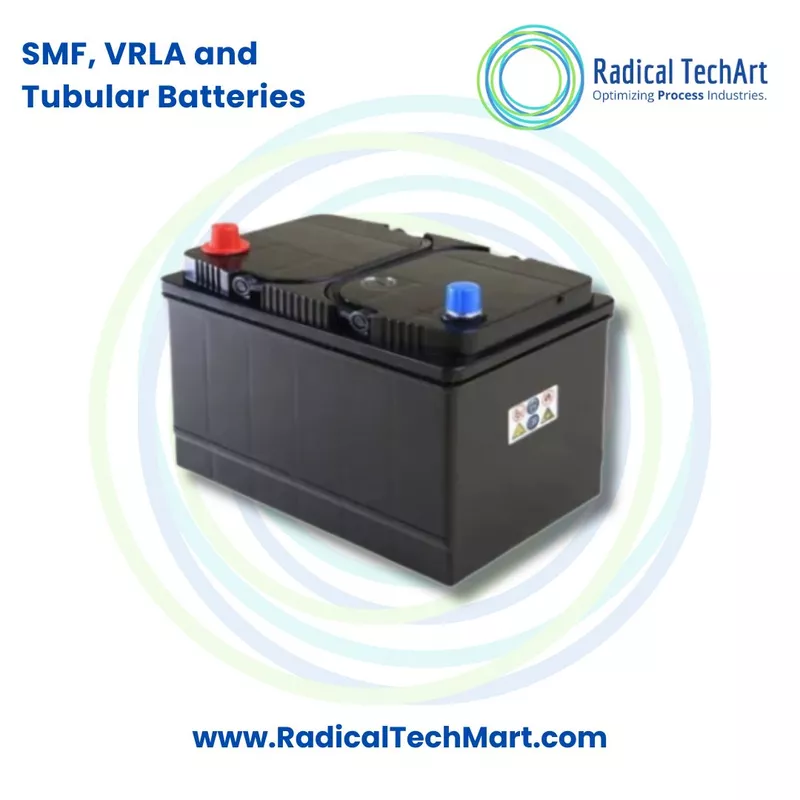
SMF, VRLA and Tubular Batteries for Online UPS
COSMIC Plus SMF, VRLA and tubular batteries are designed to provide dependable backup power for compatible online UPS systems. These batteries can be configured into battery banks for offices, server rooms, hospitals, data centres, laboratories, industrial facilities, telecom installations and other applications where continuous power availability is important.
Customize
Share :
A. Product Overview
SMF, VRLA and tubular batteries for online UPS systems store electrical energy and supply DC power to the UPS inverter whenever the main electricity supply fails or falls outside the acceptable operating range.
The appropriate battery type depends on the UPS rating, required backup duration, connected load, battery-bank voltage, charging current, available installation space, ambient temperature and maintenance preference.
SMF and VRLA Batteries
SMF batteries are commonly associated with valve-regulated lead-acid technology. VRLA batteries contain immobilised electrolyte and use a pressure-relief valve. They normally do not require regular water topping, although periodic inspection, terminal cleaning and performance testing are still recommended. VRLA batteries are generally available in AGM and gel constructions.
SMF and VRLA batteries are commonly selected for:
- Online UPS battery banks
- Server rooms and IT equipment
- Office power-backup systems
- Security and surveillance installations
- Telecom and networking equipment
- Medical and laboratory equipment
- Commercial and industrial control systems
Tubular Batteries
Tubular batteries use a tubular positive-plate construction designed to withstand repeated charging and deep-discharge cycles. They are often considered where longer backup duration, regular power interruptions or demanding cyclic operation is expected. Depending on the specific construction, flooded tubular batteries may require periodic electrolyte-level inspection and distilled-water topping.
B. Working Principle
A battery stores electrical energy in chemical form. During discharge, an electrochemical reaction converts the stored chemical energy into DC electrical power. During charging, the reaction is reversed and electrical energy is stored again inside the battery.
In an online double-conversion UPS system, the incoming AC supply is converted into DC by the rectifier. This DC power operates the inverter and charges the connected battery bank. The inverter continuously converts DC power back into regulated AC power for the connected equipment.
When the mains supply fails:
- The rectifier stops receiving input power.
- The battery bank immediately supplies DC power to the UPS inverter.
- The inverter continues supplying AC power to the connected load.
- When the mains supply returns, the rectifier resumes operation and recharges the batteries.
Because the load in an online UPS is continuously supplied through the inverter, the system can continue operating from the battery without requiring a conventional transfer switch between mains and battery operation.
C. Why These Batteries Are Used
Continuous Backup for Critical Equipment
Online UPS batteries keep essential equipment operating during blackouts, mains failures and other supply interruptions.
Protection Against Operational Downtime
Reliable battery backup helps prevent sudden shutdowns of computers, servers, controllers, communication systems, laboratory instruments and industrial equipment.
Support for Safe Shutdown
Where extended operation is not required, the battery bank provides sufficient time to save data, complete an active process or shut down equipment safely.
Flexible Backup Duration
Battery capacity and the number of batteries can be selected according to the connected load and required runtime. Larger compatible battery banks can provide longer backup, subject to the UPS charger capacity and manufacturer recommendations.
Compatibility with Different Applications
SMF and VRLA batteries are often preferred where compact installation and lower routine water maintenance are important. Tubular batteries may be selected for applications involving longer backup requirements, frequent power cuts or deeper discharge cycles.
Reliable Power for Sensitive Loads
Online UPS systems provide continuously conditioned power and use their battery bank during input failure, making them suitable for sensitive electronic and critical operational loads.
D. Suitable Buyers
These online UPS batteries are suitable for:
- Data centres and server rooms
- Hospitals, clinics and diagnostic centres
- Banks and financial institutions
- Telecom and networking companies
- Industrial plants and manufacturing facilities
- PLC, SCADA and automation-system users
- Laboratories and research facilities
- Educational institutions
- Offices and commercial buildings
- Hotels and hospitality facilities
- CCTV and security-system integrators
- Emergency lighting installations
- Retail stores and warehouses
- Government and infrastructure projects
- UPS dealers, system integrators and electrical contractors
Frequently Asked Questions
1. What are SMF batteries for online UPS systems?
SMF batteries are sealed maintenance-free lead-acid batteries commonly used in UPS battery banks. They are designed to provide DC backup power and normally do not require regular water topping. However, periodic inspection, testing and terminal maintenance are still necessary.
2. What is the difference between SMF and VRLA batteries?
VRLA means valve-regulated lead-acid. SMF is a commonly used commercial term for sealed, low-maintenance batteries, many of which use VRLA construction. AGM and gel are the two main VRLA battery constructions.
3. What is the difference between VRLA and tubular batteries?
VRLA batteries use immobilised electrolyte and a valve-regulated sealed construction. Tubular batteries use tubular positive plates and may be better suited to repeated deep-discharge operation. Flooded tubular models may require electrolyte-level checks and distilled-water topping.
4. Can tubular batteries be used with an online UPS?
Tubular batteries may be used with a compatible online UPS when the UPS charging voltage, charging current, battery-bank voltage and battery chemistry are suitable. Compatibility should be confirmed before installation.
5. How do I select the correct battery capacity for an online UPS?
Battery capacity should be selected according to:
- Online UPS rating
- Actual connected load
- Required backup duration
- DC battery-bank voltage
- Battery efficiency and ageing margin
- Ambient temperature
- UPS charger capacity
- Maximum permitted number of batteries
A proper battery-sizing calculation should be completed before purchase.
6. How long will an online UPS battery provide backup?
Backup time depends on the battery capacity, number of batteries, battery-bank voltage, connected load, battery condition, operating temperature and UPS efficiency. The same battery bank will provide shorter backup at a higher load and longer backup at a lower load.
7. Are SMF batteries completely maintenance-free?
SMF batteries do not normally require regular water topping, but they are not inspection-free. Battery voltage, terminal condition, temperature, charging performance, physical condition and available backup time should be checked periodically.
8. Do tubular batteries require maintenance?
Flooded tubular batteries generally require periodic electrolyte inspection and distilled-water topping. Maintenance requirements vary by battery design, so the manufacturer’s instructions should always be followed.
9. Can I increase UPS backup by adding more batteries?
Additional batteries or battery strings may increase runtime, but they should only be added within the UPS manufacturer’s supported configuration. The DC voltage, charger capacity, cable size, protection devices and battery matching must be checked before expansion.
10. Can old and new batteries be installed in the same battery bank?
Mixing batteries of different ages, capacities, technologies or conditions is generally not recommended because unequal performance can affect charging, discharge balance and overall battery-bank reliability. Batteries in the same string should preferably be matched.
11. What information is required before selecting an online UPS battery?
The following details should be provided:
- UPS brand and model
- UPS capacity in kVA
- DC battery-bank voltage
- Existing battery voltage and Ah rating
- Number of batteries
- Connected load
- Required backup time
- Internal or external battery-bank requirement
- Available installation space
- Preferred SMF, VRLA or tubular battery type
- Required quantity
12. Where can these batteries be used?
They can be used with compatible online UPS systems installed for servers, computers, hospital equipment, networking devices, telecom equipment, PLC panels, SCADA systems, security systems, laboratory instruments and other critical electrical loads.
13. What affects the service life of an online UPS battery?
Battery life can be affected by operating temperature, charging voltage, depth of discharge, discharge frequency, load level, storage period, terminal condition and maintenance practices. Incorrect charging and excessive heat can reduce battery performance.
14. Should the battery bank be installed by a qualified technician?
Yes. Online UPS battery banks can contain hazardous DC voltage and high short-circuit current. Installation should be performed by trained personnel using suitable cables, connectors, fuses, breakers and safety procedures.
15. How can I request the correct COSMIC Plus battery solution?
Share the UPS model, kVA rating, DC voltage, present battery configuration, required backup time, connected load, preferred battery type and quantity. These details help determine a technically compatible battery-bank configuration.