

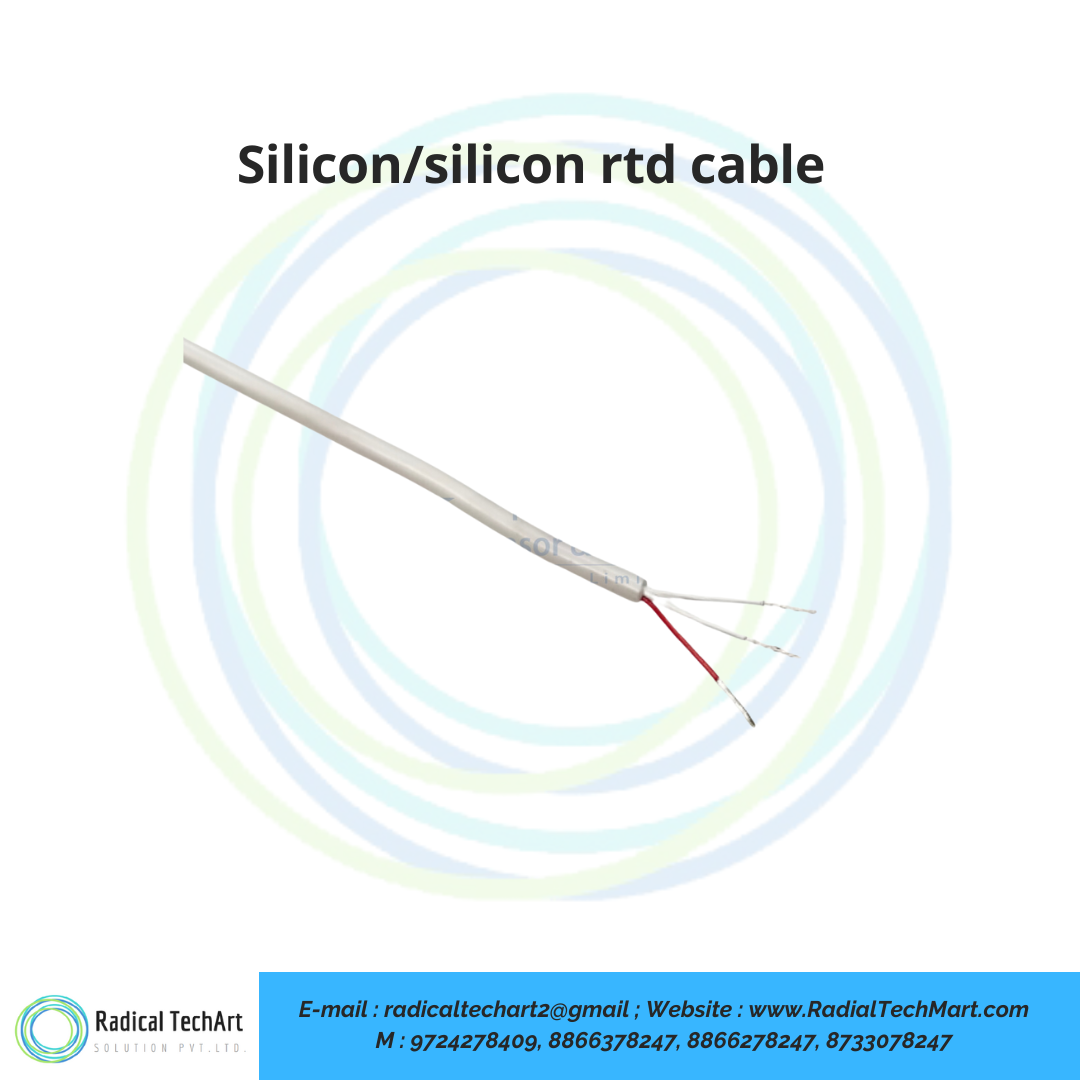
Silicone RTD Cable for Industrial Sensor Wiring
Silicon/Silicon RTD Cable is a flexible silicone insulated cable used for RTD temperature sensor wiring in high temperature industrial applications. It provides heat resistance, chemical resistance, electrical insulation and mechanical durability for reliable temperature signal transmission in control panels, motors, machinery and process equipment.
Customize
Share :
A. Product Overview
Silicon/Silicon RTD Cable is designed for connecting RTD temperature sensors to temperature controllers, indicators, transmitters, PLC systems and monitoring instruments. It is commonly used where flexible wiring, high temperature resistance and good electrical insulation are required.
The cable uses silicone insulation, which is known for its flexibility, heat resistance and insulation properties. In Silicon/Silicon cable, silicone insulation is used over the conductor and also as the outer insulation layer. This provides additional protection against heat, abrasion, mechanical stress and harsh working environments.
This cable is suitable for industrial equipment, motors, control panels, machinery, heaters, automotive applications and temperature measurement systems where normal PVC insulated cables may not perform reliably.
B. Working Principle
An RTD sensor measures temperature by changing its resistance according to the temperature of the process or equipment. As the temperature changes, the RTD element produces a corresponding resistance value. This resistance signal is sent to a temperature controller, indicator or transmitter.
Silicon/Silicon RTD Cable carries this RTD signal from the sensor to the measuring instrument. The silicone insulation protects the conductors from heat, movement, chemicals and electrical leakage. This helps maintain stable signal transmission and accurate temperature measurement.
In 3 core RTD cable applications, the additional conductor helps reduce the effect of lead wire resistance, which improves measurement accuracy compared to a basic 2 wire connection.
C. Why It Is Used
Silicon/Silicon RTD Cable is used because RTD sensor wiring is often installed in areas where heat, vibration, chemicals, movement and electrical insulation are important factors. Normal PVC wires may become hard, damaged or unreliable in such conditions.
This cable is used for:
Reliable RTD temperature sensor wiring
High temperature applications
Flexible cable routing in machinery
Motor temperature monitoring
Control panel wiring
Industrial equipment wiring
Heater and furnace temperature sensing
Automotive and machinery applications
Chemical resistant sensor wiring
Better protection against abrasion and mechanical damage
Stable temperature signal transmission
The main purpose of using Silicon/Silicon RTD Cable is to provide safe, flexible and durable wiring between the RTD sensor and the temperature measuring instrument.
D. Suitable Buyers
This product is suitable for:
Industrial automation companies
Panel builders
RTD sensor manufacturers
Temperature sensor suppliers
OEM machine manufacturers
Motor manufacturers
Heater manufacturers
Maintenance engineers
Electrical contractors
Instrumentation engineers
Process industries
Chemical plants
Food processing plants
Pharmaceutical industries
Automotive equipment manufacturers
Machinery manufacturers
Purchase managers looking for RTD sensor cable
FAQ
1. What is Silicon/Silicon RTD Cable?
Silicon/Silicon RTD Cable is a silicone insulated cable used for RTD temperature sensor wiring. It is designed for high temperature, flexible and industrial wiring applications.
2. Why is silicone insulation used in RTD cable?
Silicone insulation is used because it offers high temperature resistance, flexibility, electrical insulation and protection against harsh working conditions.
3. Where is Silicon/Silicon RTD Cable used?
It is used in motors, control panels, industrial machinery, heaters, process equipment, automotive applications and temperature measurement systems.
4. Can Silicon/Silicon RTD Cable be used for PT100 sensors?
Yes, this cable can be used for PT100 RTD sensor wiring where reliable temperature signal transmission is required.
5. What is the temperature range of silicone insulation?
Silicone insulation is commonly suitable for a wide temperature range, often from around minus 60 degree Celsius to 200 degree Celsius, depending on the cable construction and manufacturer specification.
6. What is the benefit of Silicon/Silicon insulation?
Silicon/Silicon insulation provides two layers of silicone protection, which improves flexibility, heat resistance, electrical insulation and mechanical durability.
7. Is this cable better than PVC cable?
Yes, for high temperature and flexible industrial applications, silicone insulated RTD cable is generally better than PVC cable. PVC cable is more economical, but it may not perform well in high heat or harsh environments.
8. Is Silicon/Silicon RTD Cable flexible?
Yes, silicone insulated RTD cable is flexible, which makes it suitable for machinery, moving equipment, control panels and areas where easy cable routing is required.
9. Is this cable suitable for chemical environments?
Yes, silicone insulation provides good resistance against many chemicals and harsh industrial conditions. Final suitability should be checked based on the exact chemical and application temperature.
10. Who should buy Silicon/Silicon RTD Cable?
Industrial buyers, OEMs, panel builders, sensor manufacturers, maintenance teams, electrical contractors and instrumentation engineers should buy this cable for reliable RTD sensor wiring in demanding applications.