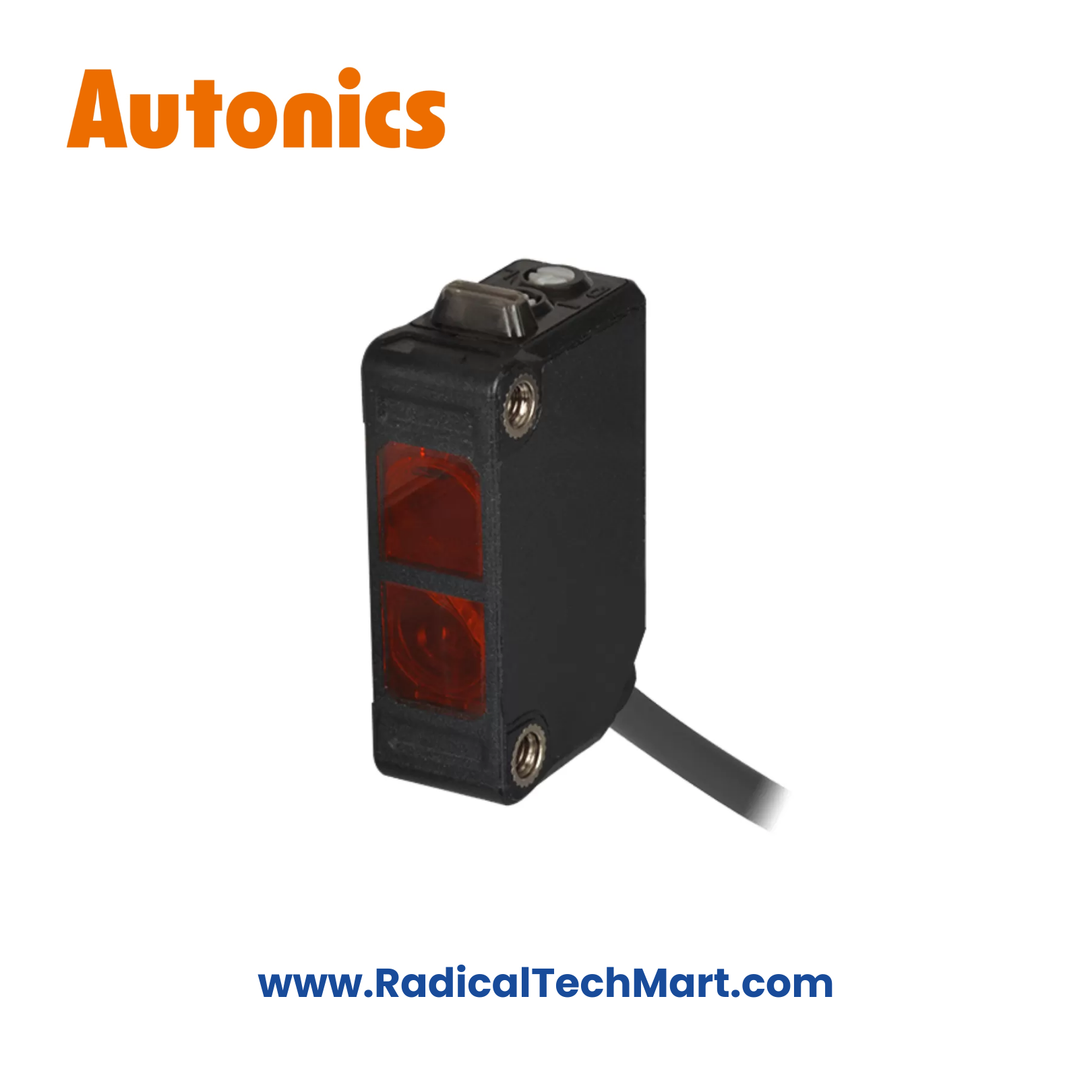
The Autonics BJR3M-PDT-P is a polarized retro-reflective photoelectric sensor built for high-reliability object detection, especially for transparent and reflective materials. With a 3-meter sensing distance, rugged housing, and IP66 protection, it is ideal for packaging lines, bottling plants, conveyors, and OEM automation machinery operating in demanding industrial environments.
Key Features
Polarized retro-reflective sensing type
Sensing distance up to 3 m
Stable detection of transparent & glossy objects
PNP open-collector output
Light-ON / Dark-ON selectable
High resistance to background reflection
Strong immunity to ambient light & dust
Robust rectangular BJR housing
IP66 protection rating
Cable type for secure industrial wiring
Technical Specifications
| Parameter | Specification |
|---|
| Model | BJR3M-PDT-P |
| Sensing Type | Polarized Retro-Reflective |
| Sensing Distance | Up to 3 m |
| Light Source | Infrared LED (polarized) |
| Output Type | PNP open collector |
| Output Mode | Light-ON / Dark-ON |
| Response Time | ≤ 1 ms |
| Supply Voltage | 12–24 VDC ±10% |
| Load Current | ≤ 100 mA |
| Protection Rating | IP66 |
| Operating Temperature | −25 to +55 °C |
Applications
Transparent bottle detection
Packaging & bottling lines
Conveyor object detection
Counting & positioning systems
Material handling equipment
Heavy-duty OEM automation
What’s in the Box?
FAQ
Q1. What type of sensor is BJR3M-PDT-P?
It is a polarized retro-reflective photoelectric sensor.
Q2. What is the maximum sensing distance?
Up to 3 meters, depending on reflector alignment.
Q3. Why use a polarized retro-reflective sensor?
For reliable detection of transparent, shiny, or reflective objects.
Q4. Does this model support NPN output?
No, this variant supports PNP output only.
Q5. Is it suitable for harsh environments?
Yes, with IP66 protection, it is ideal for industrial conditions.