

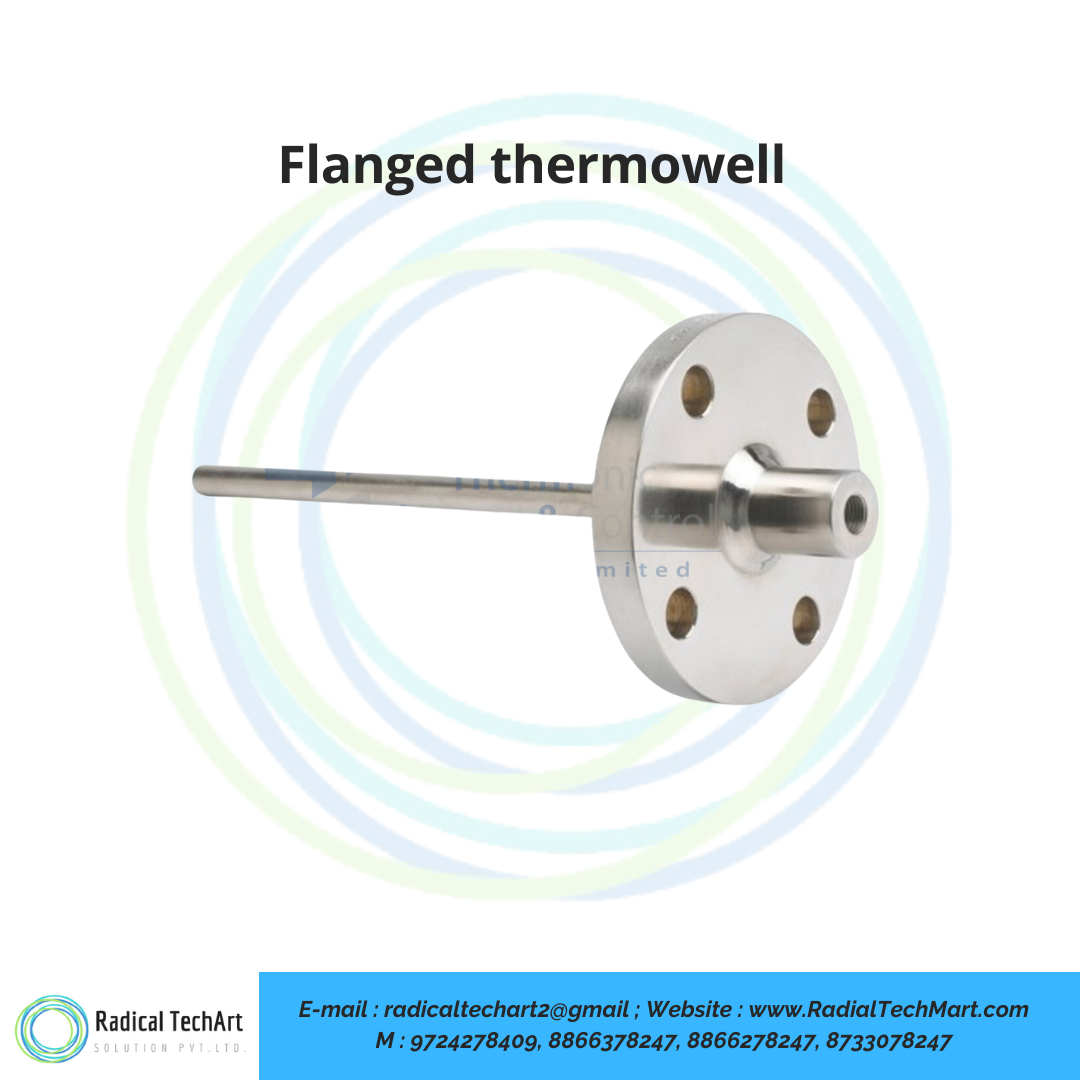
Flanged Thermowell for RTD and Thermocouple Sensor
Flanged thermowell for RTD and thermocouple sensors is used to protect temperature sensing elements from pressure, corrosion, vibration and harsh process media. It is suitable for pipelines, vessels, tanks and industrial process equipment where accurate and reliable temperature measurement is required
Customize
Share :
A. Product Overview
A flanged thermowell is a protective metal tube used in temperature measurement applications to safeguard RTD sensors, thermocouples and temperature gauges from direct contact with process media. It is installed into pipelines, tanks, vessels or process equipment through a flange mounted connection.
The thermowell acts as a barrier between the temperature sensor and the process fluid, gas or steam. This helps protect the sensor from high pressure, high temperature, corrosive chemicals, flow velocity, vibration and mechanical damage.
Flanged thermowells are commonly manufactured from materials such as SS304, SS316, SS310 and Inconel, depending on the application requirement. They are available in different flange sizes, probe lengths and connection types to suit various industrial process conditions.
This type of thermowell is widely used in chemical plants, refineries, petrochemical plants, power plants, boilers, pressure vessels, process piping, reactors, heat exchangers and other temperature monitoring systems.
B. Working Principle
The flanged thermowell is mounted on the process pipeline or vessel using a flange connection. The thermowell extends into the process media, while the RTD sensor or thermocouple is inserted inside the thermowell.
When the process fluid, gas or steam flows around the thermowell, heat is transferred through the metal wall of the thermowell to the temperature sensor inside. The RTD sensor or thermocouple then detects the temperature and sends the signal to a temperature indicator, controller, transmitter or automation system.
The sensor does not come into direct contact with the process media. This allows safe and accurate temperature measurement while protecting the sensing element from damage. The sensor can also be removed for calibration, maintenance or replacement without disturbing the process line in many applications.
C. Why It Is Used
Flanged thermowells are used because they provide strong protection and reliable temperature measurement in demanding industrial environments.
They are used to protect RTD and thermocouple sensors from pressure, corrosion, vibration and mechanical damage.
They help increase sensor life by preventing direct exposure to harsh process media.
They allow easy removal and replacement of the temperature sensor without removing the thermowell from the process.
They provide a strong and sealed flange mounted connection for pipelines, vessels and tanks.
They are suitable for high pressure, high temperature and corrosive industrial applications.
They help maintain accurate temperature measurement in process control systems.
They reduce downtime during sensor maintenance and calibration.
D. Suitable Buyers
This flanged thermowell is suitable for buyers who need reliable temperature sensor protection in industrial process applications.
Suitable buyers include:
Chemical plant operators
Petrochemical industries
Oil and gas refineries
Power plant maintenance teams
Boiler manufacturers
Pressure vessel manufacturers
Process equipment manufacturers
Pharmaceutical plants
Food and beverage processing plants
Water treatment plants
Steam line and gas line users
Industrial automation system integrators
OEM machine manufacturers
Maintenance and instrumentation engineers
Temperature sensor dealers and suppliers
FAQ
1. What is a flanged thermowell?
A flanged thermowell is a protective tube used to protect RTD sensors, thermocouples and temperature instruments from direct exposure to process media. It is mounted on a pipeline, tank or vessel using a flange connection.
2. Why is a thermowell used with RTD and thermocouple sensors?
A thermowell is used to protect the temperature sensor from pressure, corrosion, high temperature, vibration and process flow. It also helps increase sensor life and allows easier maintenance.
3. Where is a flanged thermowell commonly used?
Flanged thermowells are commonly used in chemical plants, refineries, petrochemical plants, power plants, boilers, process piping, pressure vessels, reactors, heat exchangers, steam lines, gas lines and liquid flow systems.
4. Can the sensor be removed without stopping the process?
In many applications, the RTD sensor or thermocouple can be removed from the thermowell for calibration or replacement without removing the thermowell from the process connection. This depends on the process design and safety conditions.
5. Which materials are used for flanged thermowells?
Common materials include SS304, SS316, SS310, Inconel and other special alloys. The material is selected based on temperature, pressure, corrosion resistance and process media compatibility.
6. What is the difference between a flanged thermowell and a threaded thermowell?
A flanged thermowell is mounted using a flange connection, making it suitable for larger pipelines, high pressure applications and critical process systems. A threaded thermowell is mounted using a threaded connection and is generally used in smaller or less demanding applications.
7. Which sensors can be used with a flanged thermowell?
Flanged thermowells can be used with RTD sensors, thermocouples, temperature gauges, temperature transmitters and other temperature measuring instruments.
8. How do I select the right flanged thermowell?
To select the right flanged thermowell, check the process temperature, pressure, media type, flange size, flange rating, insertion length, bore size, stem design, sensor type and material compatibility.
9. Is a flanged thermowell suitable for corrosive media?
Yes, flanged thermowells can be used for corrosive media when the correct material is selected, such as SS316, Inconel or other special alloys based on the process requirement.
10. What are the main benefits of using a flanged thermowell?
The main benefits are sensor protection, longer sensor life, safe temperature measurement, easy maintenance, strong process connection and reliable performance in high pressure and high temperature applications.