

FLP / explosion-proof temperature and humidity transmitter with local display for Zone 1 and Zone 2 hazardous areas. Measures 0–100% RH and 0–100°C, operates on 10–30 VDC, and provides a 4–20 mA output for PLC/DCS/SCADA integration. Fully isolated circuits and an IP65 flameproof enclosure make it suitable for refineries, chemical plants, gas skids, and solvent/storage zones.
Download the manual here!!
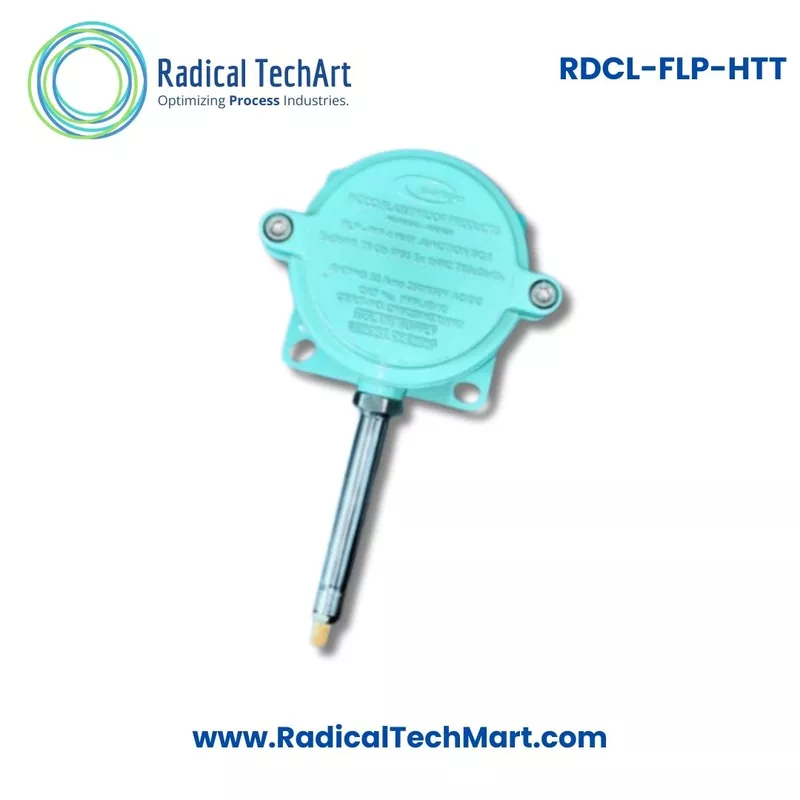


FLP/ Explosion proof Temperature & Humidity Transmitter
Non-returnable
₹7,500.00
Customize
Add Note
Share :
Product Details
A. Product overview
The FLP / Explosion-Proof Temperature & Humidity Transmitter with Display is designed for continuous monitoring of relative humidity and temperature in Zone 1 and Zone 2 hazardous areas. It measures 0–100% RH and 0–100°C and delivers a standard 4–20 mA output signal for connection to PLC, DCS/SCADA, BMS, data loggers, and indicators. The unit operates on 10–30 VDC and is built for industrial reliability with full isolation between the power supply, measuring circuit, and output stage. A rugged IP65 flameproof enclosure and clear local display make it suitable for refineries, chemical plants, gas skids, and solvent or flammable storage zones.
B. Working principle
Sensing: Internal sensing elements continuously measure ambient humidity and temperature in the surrounding area.
Signal processing: The transmitter conditions and scales the sensor signals to produce stable measurement values across the full ranges.
Electrical isolation: The power input, measuring circuitry, and 4–20 mA output are electrically isolated to reduce noise, prevent ground loops, and improve safety in hazardous area installations.
Output conversion: The measured values are converted into a 4–20 mA signal used by industrial controllers for monitoring, alarms, and process control.
Local indication: The built-in display provides on-site RH and temperature readings for quick verification during installation and maintenance.
C. Why it is used
Continuous RH and temperature monitoring in hazardous areas where safety and reliability are critical
Integration with automation systems using 4–20 mA signals for alarms, trending, and control actions
Helps protect equipment, stored chemicals, and process quality by maintaining stable environmental conditions
Full isolation improves measurement reliability and reduces interference from industrial electrical noise
Local display supports quick inspection, calibration checks, and troubleshooting in the field
IP65 flameproof enclosure enables use in dust-prone and splash-prone industrial locations
D. Suitable buyers
Refineries and petrochemical plants (maintenance, instrumentation, and E&I teams)
Chemical manufacturing plants and solvent handling facilities
Gas skids, compressor skids, and packaged equipment OEMs
EPC contractors and hazardous-area system integrators
Industrial automation and instrumentation integrators (PLC/DCS/SCADA)
Storage terminals for solvents, fuels, and flammable chemicals
Paint/thinner rooms, process storage areas, and hazardous utility zones
FAQ
1. What is an FLP or explosion-proof temperature and humidity transmitter?
It is a transmitter built in a flameproof enclosure for hazardous areas that continuously measures humidity and temperature and sends signals to control or monitoring systems.
2. Can this transmitter be used in Zone 1 and Zone 2 areas?
Yes. It is intended for Zone 1 and Zone 2 hazardous locations where flammable gases may be present.
3. What output signal does it provide?
It provides a 4–20 mA output signal, which is widely used for industrial automation and hazardous area control systems.
4. What are the measurement ranges and accuracy?
Humidity: 0–100% RH, accuracy ±3% RH (default).
Temperature: 0–100°C, accuracy ±0.5°C (default).
5. What power supply is required?
It operates on 10–30 VDC, commonly powered from 24 VDC DC supplies used in industrial control panels.
6. Why is electrical isolation important in hazardous areas?
Isolation improves safety and reliability by reducing electrical interference, avoiding ground loop issues, and protecting connected PLC/DCS input circuits.
7. Where is this product commonly installed?
Typical applications include refineries, chemical plants, gas skids, solvent storage, flammable material storage areas, and other hazardous industrial zones.
8. What is the benefit of the local display?
The display allows operators and maintenance staff to verify RH and temperature on-site without needing to access the PLC/SCADA system, which speeds up commissioning and troubleshooting.
Ratings And Reviews