

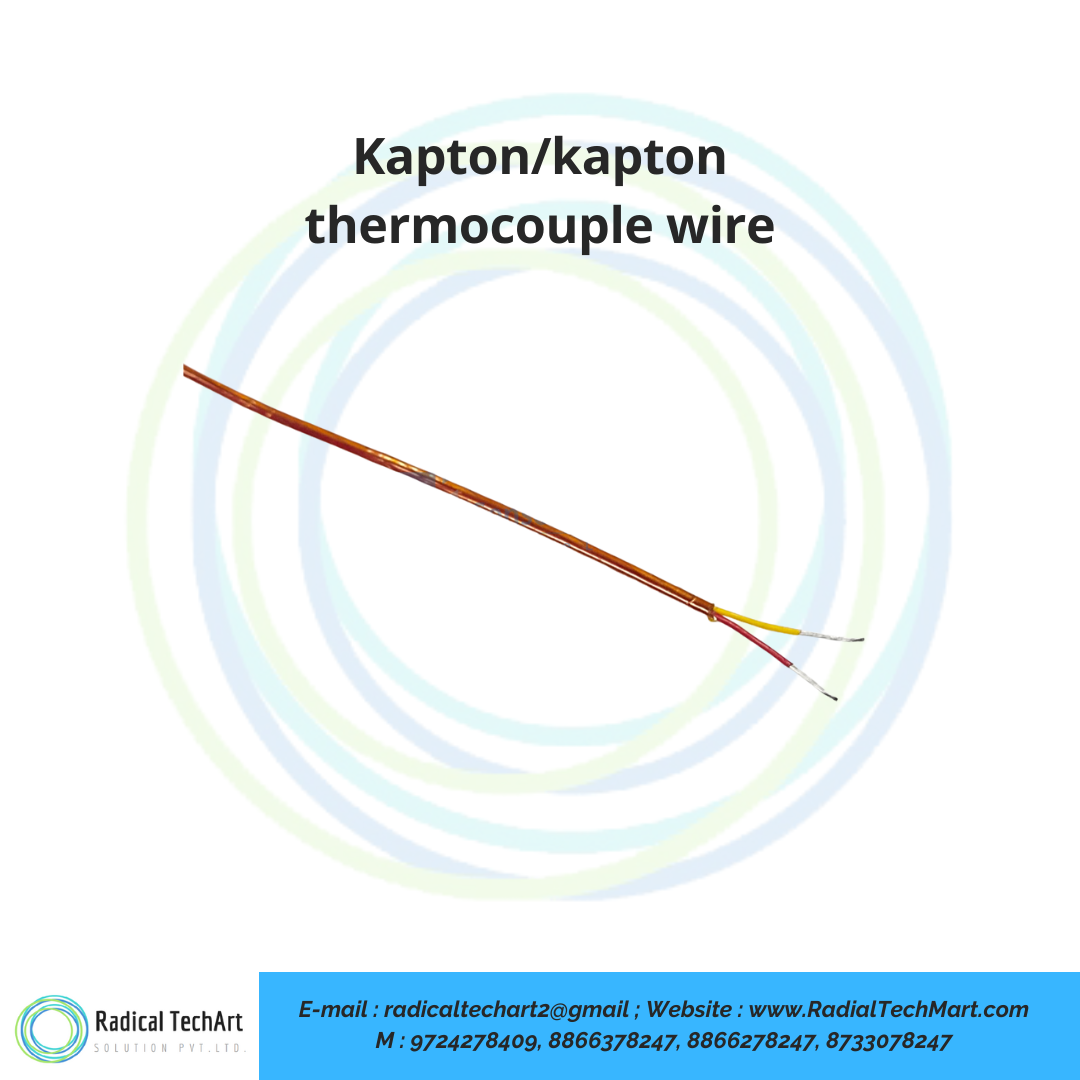
Kapton Insulated Thermocouple Wire
Kapton and Kapton thermocouple wire is a high-temperature temperature sensing wire designed for applications where heat resistance, chemical resistance, flexibility, and electrical insulation are required. It is suitable for industrial equipment, electrical motors, aerospace, automotive, laboratories, and process temperature measurement applications.
Customize
Share :
A. Product Overview
Kapton and Kapton thermocouple wire is a special type of thermocouple cable insulated with Kapton, a high-performance polyimide film known for its excellent temperature resistance, chemical resistance, and electrical insulation properties.
This wire is used to connect thermocouple sensors with temperature indicators, controllers, transmitters, data loggers, and monitoring systems. The Kapton insulation helps protect the thermocouple conductors from heat, chemicals, abrasion, moisture, and electrical interference.
Kapton insulated thermocouple wire is preferred in demanding applications where normal insulation materials such as PVC or rubber may fail due to high temperature or harsh working conditions.
B. Working Principle
A thermocouple wire works on the principle of temperature difference between two dissimilar metals. When the thermocouple junction is exposed to temperature, it generates a small voltage signal. This signal is then carried through the thermocouple wire to a temperature measuring instrument.
In Kapton and Kapton thermocouple wire, the Kapton insulation protects the conductors while allowing the temperature signal to travel accurately from the sensor point to the measuring device. The insulation does not measure temperature directly, but it helps maintain signal reliability by protecting the wire from external damage, heat, chemicals, and electrical leakage.
C. Why It Is Used
Kapton and Kapton thermocouple wire is used because it provides reliable performance in high-temperature and harsh industrial environments.
It is mainly used for:
- High-temperature temperature measurement
- Thermocouple sensor wiring
- Electrical insulation in harsh environments
- Chemical resistant wiring applications
- Aerospace and automotive temperature monitoring
- Electrical motor and transformer applications
- Industrial equipment and machinery
- Laboratory and testing applications
- Process control and automation systems
Compared to PVC or rubber insulated wire, Kapton thermocouple wire offers better heat resistance, chemical resistance, and electrical insulation. This makes it suitable for critical temperature sensing applications where cable failure can affect process safety, accuracy, and machine performance.
D. Suitable Buyers
Kapton and Kapton thermocouple wire is suitable for:
- Industrial automation companies
- Temperature sensor manufacturers
- Electrical panel builders
- Thermocouple and RTD suppliers
- Aerospace component manufacturers
- Automotive testing companies
- Electrical motor manufacturers
- Transformer manufacturers
- Laboratory equipment suppliers
- Process industries
- Maintenance and instrumentation teams
- OEM machine manufacturers
- Petrochemical and chemical plants
- Pharmaceutical and food processing industries
FAQ
1. What is Kapton and Kapton thermocouple wire?
Kapton and Kapton thermocouple wire is a thermocouple cable insulated with Kapton polyimide film. It is used for temperature sensing applications where high temperature resistance, chemical resistance, and electrical insulation are required.
2. Why is Kapton insulation used in thermocouple wire?
Kapton insulation is used because it can withstand high temperatures, resist chemicals, provide strong electrical insulation, and protect the wire in demanding industrial environments.
3. Where is Kapton thermocouple wire commonly used?
It is commonly used in aerospace, automotive, electrical motors, transformers, industrial machinery, laboratories, process plants, and temperature control systems.
4. Is Kapton thermocouple wire suitable for high-temperature applications?
Yes, Kapton thermocouple wire is suitable for high-temperature applications where standard insulation materials such as PVC or rubber may not perform reliably.
5. What is the benefit of using Kapton thermocouple wire over PVC wire?
Kapton thermocouple wire offers better temperature resistance, chemical resistance, and electrical insulation compared to PVC wire. It is more suitable for critical and high-performance applications.
6. Can Kapton thermocouple wire be used in chemical environments?
Yes, Kapton insulation provides good chemical resistance, making the wire suitable for many harsh industrial and chemical environments.
7. Is this wire used only for thermocouples?
Kapton insulated wire is mainly used for thermocouple temperature sensing, but Kapton insulation is also used in electrical wiring applications where heat resistance and insulation are important.
8. Which industries use Kapton and Kapton thermocouple wire?
Industries such as aerospace, automotive, pharmaceuticals, chemical processing, electrical equipment manufacturing, laboratories, and industrial automation use Kapton thermocouple wire.
9. Does Kapton thermocouple wire help improve temperature measurement reliability?
Yes, the Kapton insulation protects the wire from heat, chemicals, abrasion, and electrical leakage, which helps maintain reliable temperature signal transmission.
10. Who should buy Kapton thermocouple wire?
This wire is ideal for OEMs, maintenance teams, instrumentation engineers, panel builders, temperature sensor manufacturers, automation companies, and industrial buyers who need reliable thermocouple wiring for harsh applications.