







RTD PT100 Sensor with Bar Stock Threaded Thermowell
Temperature Sensor with Bar Stock Threaded Thermowell is used for accurate temperature measurement in industrial pipelines, vessels and process equipment. The thermowell protects the RTD or thermocouple sensor from pressure, corrosion and process media while allowing reliable temperature sensing.
Customize
Share :
A. Product Overview
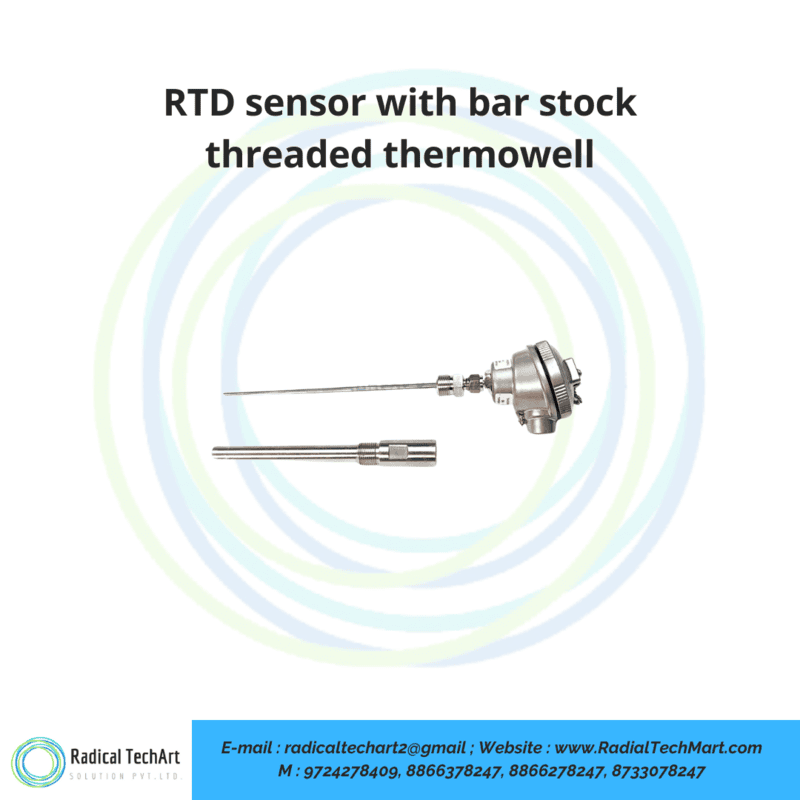
A Temperature Sensor with Bar Stock Threaded Thermowell is a rugged industrial temperature measurement assembly designed for demanding process applications. It consists of an RTD or thermocouple sensor inserted inside a solid bar stock thermowell.
The bar stock thermowell is made from metal such as SS304, SS316, SS310 or Inconel and is threaded into a process pipe, tank or vessel. It protects the sensing element from direct contact with process fluid, gas, steam, pressure and corrosive media.
This type of temperature sensor is commonly used where accurate, stable and long-term temperature measurement is required without exposing the sensor directly to harsh process conditions.
Available Types: Pt100, J Type and K Type
Configuration: Simplex and Duplex
Temperature Range: -50 to 500°C, 0 to 600°C and 0 to 1200°C
Probe Diameter: 6 mm, 8 mm, 10 mm and 12 mm
Probe Length: 25 mm to 1000 mm
Accuracy: Class A or Class B as per IEC 60751
Thermowell Material: SS304, SS316, SS310, Inconel and other materials as per application
B. Working Principle
The working principle of this temperature sensor is based on heat transfer through the thermowell.
The bar stock threaded thermowell is installed into the process pipeline or vessel. The RTD or thermocouple sensor is inserted inside the thermowell. When the process fluid or gas flows around the thermowell, heat is transferred from the process media to the thermowell body.
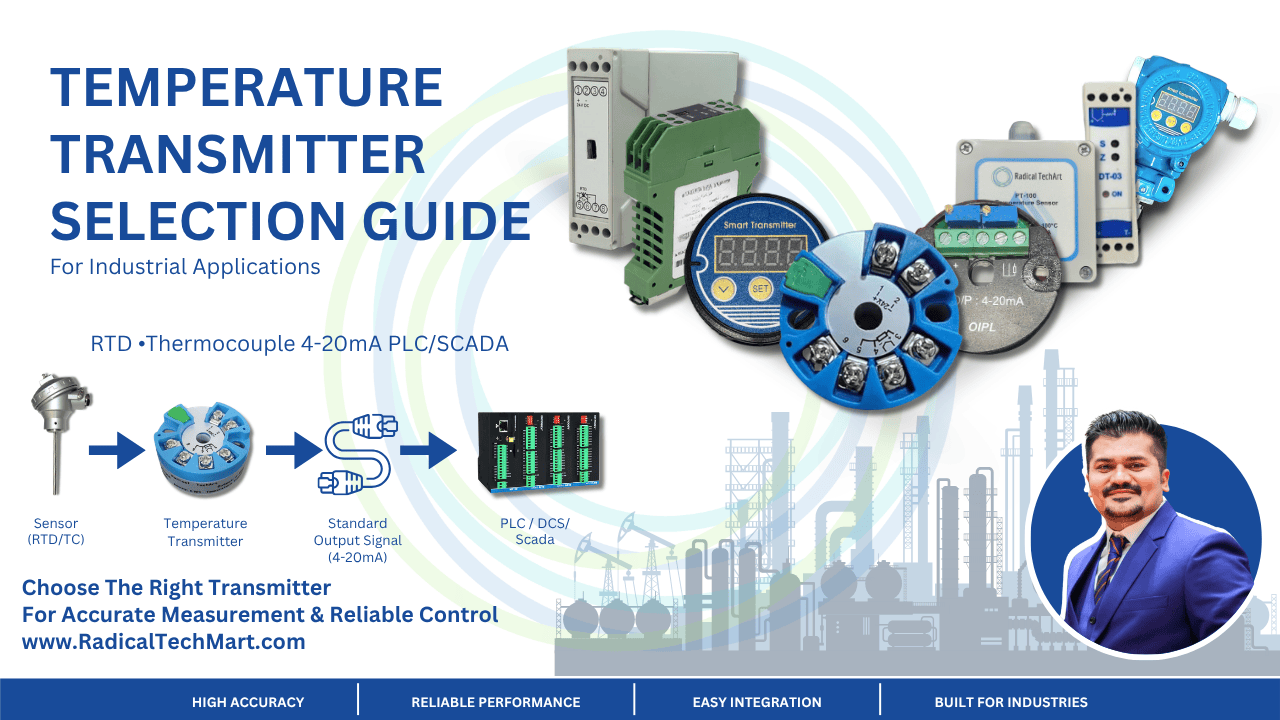
The thermowell conducts this heat to the inserted temperature sensor. The RTD sensor changes its resistance according to temperature, while the thermocouple generates a voltage based on temperature difference. This signal is then sent to a temperature indicator, controller, transmitter or PLC for temperature monitoring and control.
Since the sensor is not directly exposed to the process media, it remains protected while still giving accurate temperature measurement.
C. Why It Is Used
Temperature Sensor with Bar Stock Threaded Thermowell is used because it provides protection, reliability and easy maintenance in industrial temperature measurement applications.
It protects the sensor from high pressure, high temperature, corrosion, vibration and direct contact with process media. This increases the life of the RTD or thermocouple sensor and reduces replacement cost.
Another major advantage is that the sensor can be removed, checked, calibrated or replaced without opening the pipeline or stopping the process. The thermowell remains installed in the process, while only the sensor is removed.
This makes it suitable for continuous process industries where shutdowns are costly and accurate temperature control is important.
D. Suitable Buyers
This product is suitable for buyers who need reliable temperature measurement in pipelines, vessels, tanks and industrial process equipment.
Suitable buyers include:
Process industries looking for temperature sensors for pipelines and vessels
Chemical plants requiring corrosion-resistant temperature measurement
Pharmaceutical companies needing accurate process temperature monitoring
Oil and gas industries requiring rugged thermowell-based sensors
Power plants and boiler manufacturers needing high-temperature sensors
Food and beverage plants requiring hygienic and stable temperature monitoring
OEM machine manufacturers using RTD or thermocouple sensors in equipment
Maintenance teams replacing existing temperature probes with thermowell assemblies
Instrumentation engineers selecting sensors for pressure and temperature applications
Industrial automation suppliers and panel builders requiring process temperature sensors
FAQ
1. What is a Temperature Sensor with Bar Stock Threaded Thermowell?
It is an industrial temperature sensor assembly where an RTD or thermocouple sensor is inserted inside a bar stock threaded thermowell. The thermowell protects the sensor from process pressure, fluid, gas and corrosion.
2. Why is a thermowell used with an RTD sensor?
A thermowell is used to protect the RTD sensor from harsh process conditions. It also allows the sensor to be removed or replaced without stopping the process.
3. Where is this temperature sensor used?
It is used in pipelines, tanks, vessels, boilers, reactors, heat exchangers, chemical plants, pharma plants, food processing units, oil and gas plants and power plants.
4. What sensor types are available in this assembly?
This assembly can be supplied with Pt100 RTD, J Type thermocouple or K Type thermocouple depending on the required temperature range and application.
5. What is the difference between simplex and duplex temperature sensors?
A simplex sensor has one sensing element, while a duplex sensor has two sensing elements in the same probe. Duplex sensors are useful when two separate readings or backup measurement is required.
6. What materials are available for the thermowell?
Common thermowell materials include SS304, SS316, SS310 and Inconel. The material is selected based on process temperature, pressure, corrosion level and media compatibility.
7. Can the sensor be replaced without removing the thermowell?
Yes. The sensor can be removed from the thermowell for replacement or calibration while the thermowell remains installed in the process line.
8. Is this sensor suitable for high-pressure applications?
Yes. Bar stock thermowells are designed for industrial pressure applications. The correct thermowell size, material and connection type should be selected based on process pressure and temperature.
9. What is the standard accuracy of this RTD sensor?
The RTD sensor is generally available in Class A or Class B accuracy as per IEC 60751.
10. How do I select the right temperature sensor with thermowell?
To select the right sensor, check the process temperature, pressure, media, pipe size, insertion length, connection thread, sensor type, accuracy class and thermowell material.