




Stator Winding RTD Temperature Sensor for Motors and Generators
Stator Winding RTD is a Pt100 temperature sensor used for continuous temperature monitoring of stator windings in electric motors, generators and rotating machinery. It helps detect overheating, protect insulation, improve machine safety and support reliable operation in industrial applications.
Customize
Share :
A. Product Overview
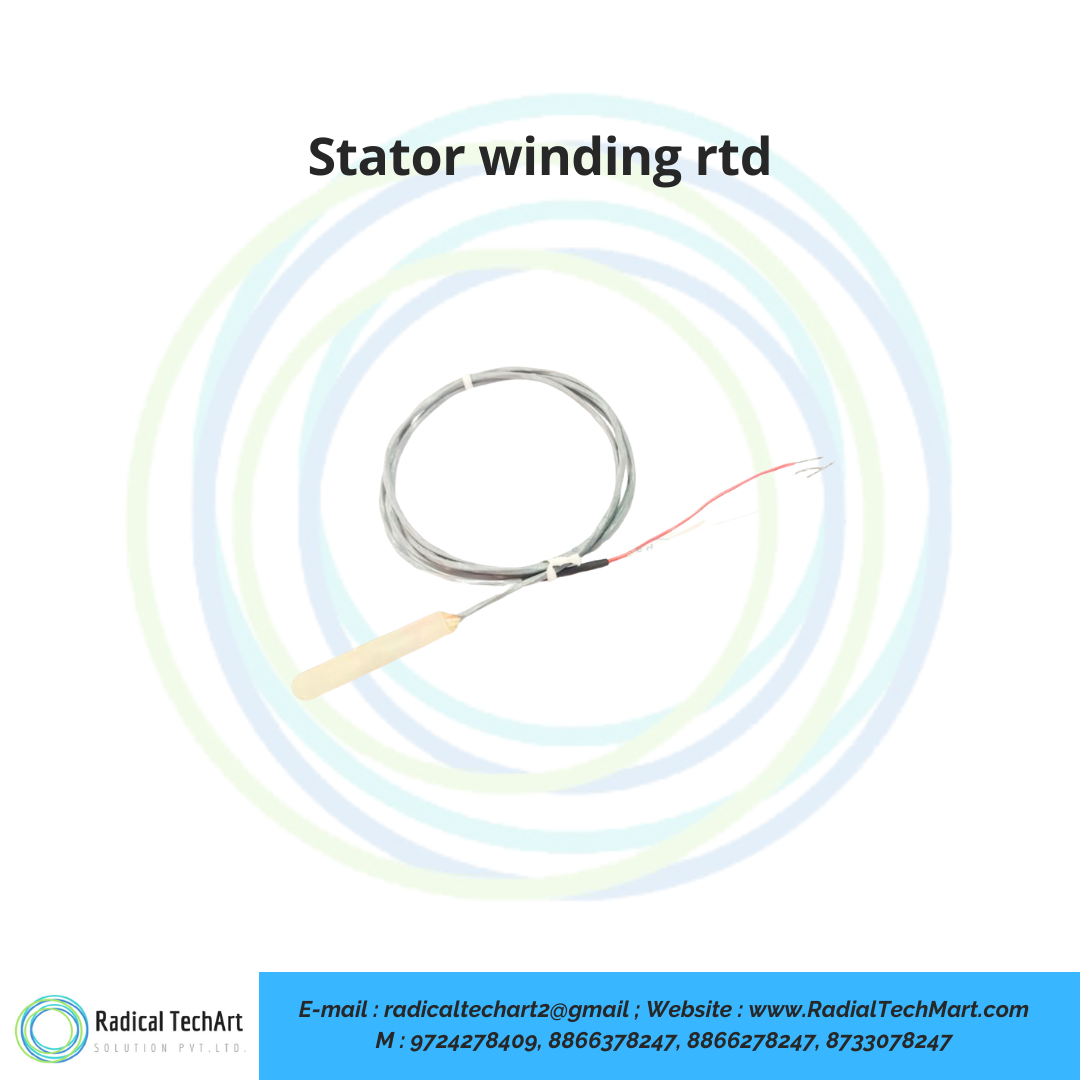
Stator Winding RTD, also known as a stator winding Resistance Temperature Detector, is a temperature sensor specially designed to measure the temperature of stator windings in electric motors, generators and other rotating electrical machines.
The stator winding is one of the most critical parts of a motor or generator. During operation, heat is generated inside the winding due to electrical load, current flow and machine running conditions. If this heat is not monitored properly, it can damage insulation, reduce machine life and cause unexpected breakdown.
This RTD sensor is generally installed inside stator winding slots or between the windings, allowing it to directly sense the winding temperature. It is commonly available with a Pt100 simplex element, epoxy fiberglass body, high dielectric strength and Class A accuracy as per IEC 60751.
Key specifications may include:
Element: Pt100 simplex
Temperature range: Up to 200°C
Body material: Epoxy fiberglass
Dielectric strength: Up to 5 kV
Wire length: 0.5 meter to 5 meter
Accuracy: Class A as per IEC 60751
B. Working Principle
The Stator Winding RTD works on the resistance temperature principle. Inside the sensor, there is a platinum RTD element. In most industrial applications, this element is Pt100, which means it has a resistance of 100 ohms at 0°C.
When the temperature of the stator winding increases, the resistance of the Pt100 element also increases. This change in resistance is measured by a temperature indicator, controller, relay, PLC or motor protection system.
The control system then converts the resistance value into a temperature reading. Based on this reading, the system can display the temperature, trigger an alarm, stop the motor or activate protection logic to prevent overheating.
Because the sensor is installed close to the winding, it provides accurate and continuous temperature feedback from the actual heating area of the motor or generator.
C. Why It Is Used
Stator Winding RTD is used to protect motors and generators from overheating and insulation failure. In large electrical machines, temperature rise inside the winding can directly affect performance, safety and service life.
It is used for:
Continuous temperature monitoring of stator windings
Protection against overheating
Prevention of insulation damage
Motor and generator safety monitoring
Real-time temperature feedback to control panels
Early fault detection in rotating machinery
Improving machine life and reliability
Reducing unplanned breakdowns
Supporting preventive maintenance
Maintaining safe and efficient operation
RTDs are preferred because they offer high accuracy, good stability, fast response and reliable performance in harsh industrial environments such as vibration, moisture and temperature variation.
D. Suitable Buyers
Stator Winding RTD is suitable for customers and industries that use, manufacture, repair or maintain large motors and generators.
Suitable buyers include:
Electric motor manufacturers
Generator manufacturers
Alternator manufacturers
Motor rewinding workshops
Electrical maintenance contractors
Panel builders
OEM machine manufacturers
Power plants
Steel plants
Cement plants
Chemical plants
Textile industries
Paper mills
Water treatment plants
Heavy engineering industries
Process industries
Industrial automation companies
Maintenance and reliability teams
This product is especially useful for applications where motor and generator winding temperature must be monitored continuously for safety and protection.
FAQ
1. What is a Stator Winding RTD?
A Stator Winding RTD is a temperature sensor used to measure the temperature of stator windings in motors, generators and rotating machinery. It helps protect the machine from overheating and insulation failure.
2. Where is the Stator Winding RTD installed?
It is usually installed inside the stator winding slots, between the windings or near the winding surface. This position helps the sensor measure the actual winding temperature accurately.
3. What is the element used in this sensor?
The sensor commonly uses a Pt100 RTD element. Pt100 means the sensor has 100 ohms resistance at 0°C and follows the standard platinum resistance temperature curve.
4. Why is Pt100 used in Stator Winding RTD sensors?
Pt100 is used because it provides accurate, stable and repeatable temperature measurement. It is widely accepted in industrial temperature monitoring applications.
5. What is the temperature range of this Stator Winding RTD?
As per the given product specification, the sensor can measure temperatures up to 200°C. The actual range may depend on the sensor design, insulation material and application requirement.
6. What is the body material of the sensor?
The body material is epoxy fiberglass. This material provides electrical insulation, mechanical strength and suitability for installation inside motor and generator windings.
7. What is dielectric strength in Stator Winding RTD?
Dielectric strength shows the sensor’s ability to withstand electrical voltage without breakdown. In this product, the dielectric strength is up to 5 kV, making it suitable for motor and generator winding applications.
8. Why is Stator Winding RTD important for motors?
It helps monitor winding temperature continuously. If the winding temperature increases beyond a safe limit, the RTD signal can be used to generate an alarm or trip the motor to prevent damage.
9. Can this sensor be used in generators?
Yes, Stator Winding RTD sensors are widely used in generators, alternators and other rotating electrical machines for winding temperature monitoring and protection.
10. What is the difference between a normal RTD and a Stator Winding RTD?
A normal RTD is used for general temperature measurement, while a Stator Winding RTD is specially designed with a flat and insulated body for installation inside motor and generator stator windings.
11. What accuracy class is available in this product?
The given product specification mentions Class A accuracy as per IEC 60751. This provides reliable and accurate temperature measurement for industrial applications.
12. Who should buy a Stator Winding RTD?
Motor manufacturers, generator manufacturers, rewinding workshops, electrical maintenance teams, power plants, panel builders and heavy industries should buy this sensor for machine protection and temperature monitoring.